DKD Prevention: How to Stop Diabetic Kidney Disease Before It Starts
When you have diabetes, your kidneys are under constant stress. DKD prevention, or the strategy of stopping diabetic kidney disease before it causes irreversible damage, is not optional—it’s essential. Also known as diabetic nephropathy, this condition quietly damages the tiny filters in your kidneys, leading to protein leakage, fluid retention, and eventually kidney failure. And here’s the truth: half of people with type 2 diabetes will develop some level of kidney damage if they don’t take action.
DKD prevention isn’t just about taking your metformin or checking your A1C. It’s a three-part fight: blood pressure control, keeping your blood pressure below 130/80, diabetes management, maintaining steady glucose levels, and kidney health, avoiding drugs and habits that strain your kidneys. Studies show that keeping your HbA1c under 7% cuts kidney damage risk by 30%. But even more powerful? Using an ACE inhibitor or ARB—even if your blood pressure is normal. These aren’t just heart meds; they’re kidney shields.
What most people miss is that sugar isn’t the only enemy. Salt, NSAIDs like ibuprofen, and even some herbal supplements can speed up kidney decline. A single daily ibuprofen might seem harmless, but over time, it reduces blood flow to your kidneys. And if you’re taking multiple medications for diabetes, high blood pressure, or cholesterol, you’re already at higher risk for dangerous interactions. That’s why an annual medication review with a pharmacist isn’t a luxury—it’s a lifesaver. The same way you check your blood sugar, you need to check your kidney function with a simple urine test for albumin and a blood test for creatinine. Catching early protein loss is the difference between slowing damage and needing dialysis.
DKD prevention works best when it’s daily, not yearly. Walk 30 minutes. Skip the processed snacks. Drink water instead of soda. Get your blood pressure checked every time you see your doctor. These aren’t grand gestures—they’re small, repeatable habits that stack up. And if you’re on a GLP-1 drug like Ozempic, that’s a bonus: these medications don’t just help your weight and sugar—they also reduce kidney stress. The science is clear: early, consistent action stops DKD in its tracks. Below, you’ll find real, practical advice from doctors and patients who’ve walked this path—no fluff, no theory, just what actually works.
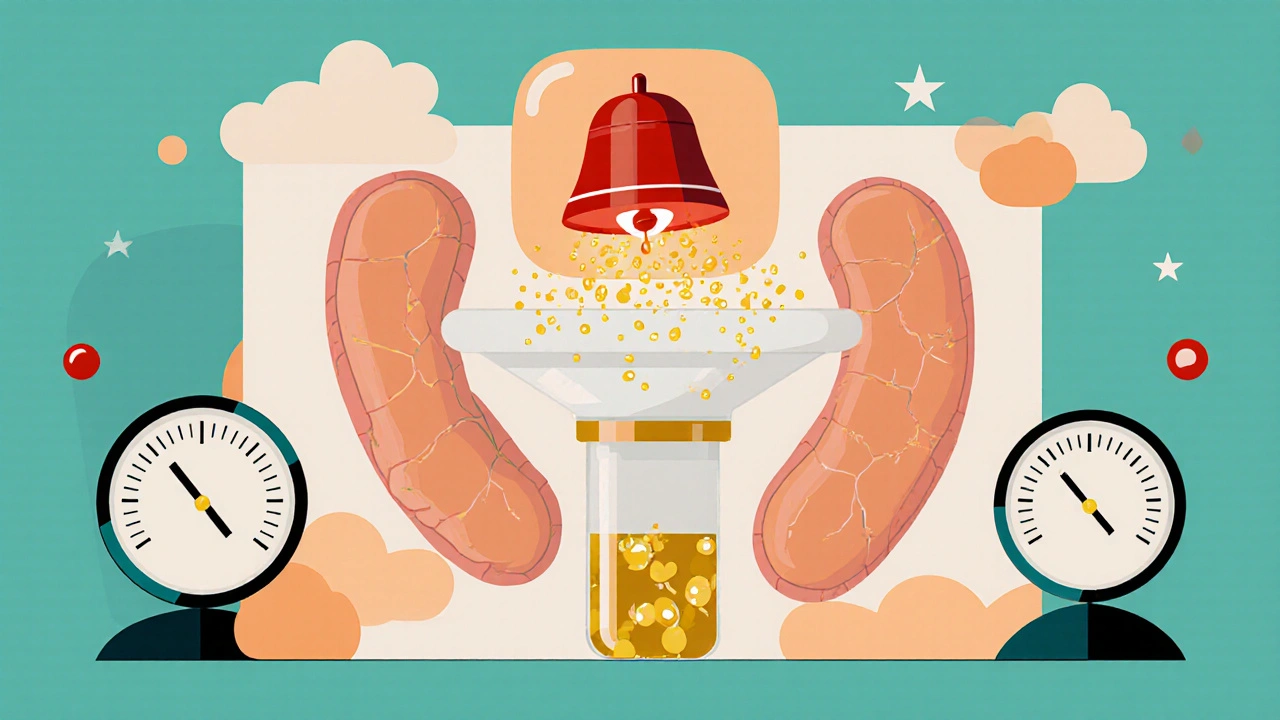
Diabetic Kidney Disease: How Early Albuminuria Signals Risk and Why Tight Control Saves Kidneys
Albuminuria is the earliest sign of diabetic kidney disease. Tight blood sugar and blood pressure control, plus modern medications, can stop or reverse damage-if caught in time.
Read More