Albuminuria: What It Means, Why It Matters, and How Medications Affect It
When your urine contains too much albumin, a protein normally kept in the blood by healthy kidneys. Also known as proteinuria, it’s one of the earliest warning signs your kidneys aren’t filtering right. This isn’t just a lab result—it’s a red flag that something’s wrong with how your body handles waste, fluids, and blood pressure. Many people don’t feel anything at first, but left unchecked, albuminuria can lead to serious kidney damage, heart problems, or even kidney failure.
Most often, albuminuria shows up in people with diabetes, a condition where high blood sugar slowly damages the tiny filters in the kidneys, or hypertension, high blood pressure that puts extra strain on kidney blood vessels. These two conditions are behind nearly 70% of all chronic kidney disease cases. But it’s not just about sugar or pressure—some medications can make albuminuria worse, while others are designed to stop it in its tracks. ACE inhibitors and ARBs, for example, are common prescriptions that reduce albumin leakage by relaxing kidney blood vessels. But if you’re taking NSAIDs like ibuprofen regularly, or mixing certain antibiotics with other drugs, you might be accidentally making things worse.
What’s tricky is that albuminuria often hides in plain sight. You won’t see foam in your urine unless it’s advanced. Blood tests and urine dipsticks are the only reliable ways to catch it early. That’s why people with diabetes or high blood pressure need regular urine checks—even if they feel fine. The good news? Catching it early gives you a real shot at slowing or stopping kidney damage. Lifestyle changes, tighter control of blood sugar and pressure, and the right meds can make a huge difference.
In the posts below, you’ll find real-world insights on how drugs affect kidney function, what to watch for when you’re on long-term medications, and how conditions like diabetes and high blood pressure quietly damage your kidneys over time. Some articles dig into how common prescriptions like metformin or NSAIDs play a role. Others show how simple steps—like annual medication reviews or avoiding certain supplement combos—can protect your kidneys before it’s too late. This isn’t theoretical. These are the things people actually need to know to keep their kidneys working.
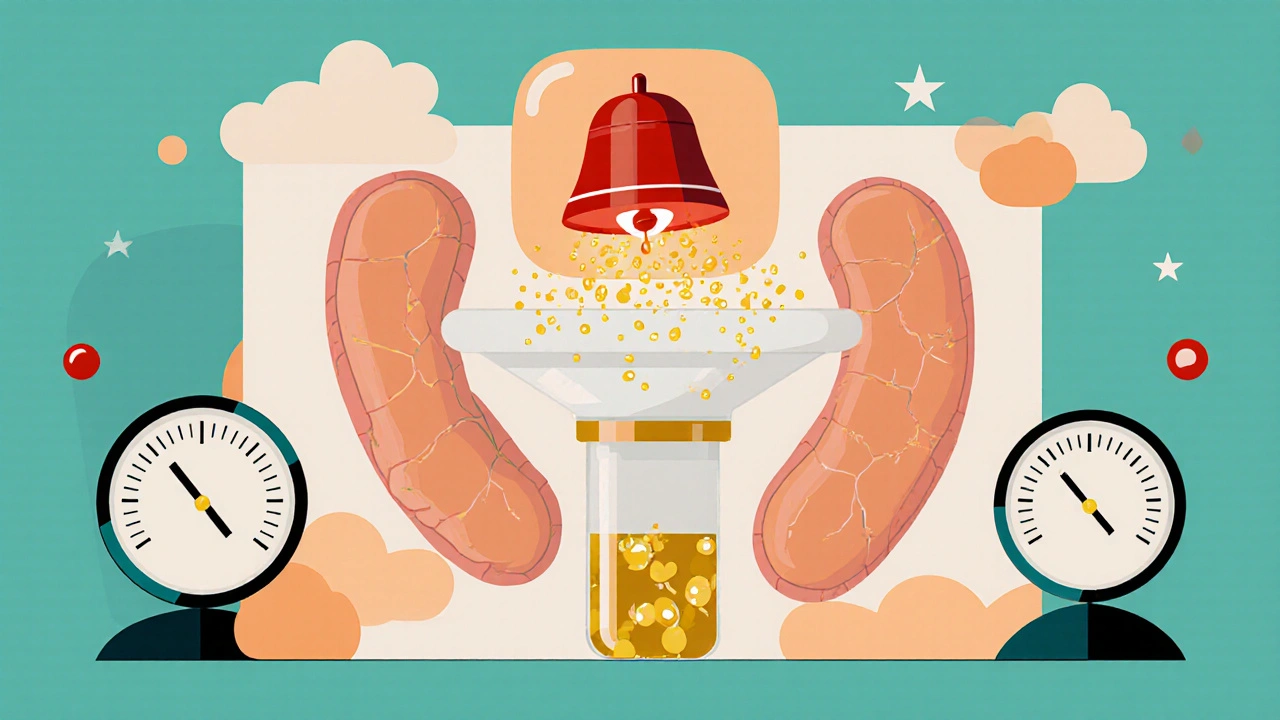
Diabetic Kidney Disease: How Early Albuminuria Signals Risk and Why Tight Control Saves Kidneys
Albuminuria is the earliest sign of diabetic kidney disease. Tight blood sugar and blood pressure control, plus modern medications, can stop or reverse damage-if caught in time.
Read More