| Parameter | What it Measures | Standard Acceptance Range (90% CI) |
|---|---|---|
| Cmax | Peak plasma concentration (How fast it hits) | 80% - 125% |
| AUC | Total drug exposure over time (How much hits) | 80% - 125% |
| NTI Range | Narrow Therapeutic Index requirements | Often 90% - 111% |
The shortcut to generic approval
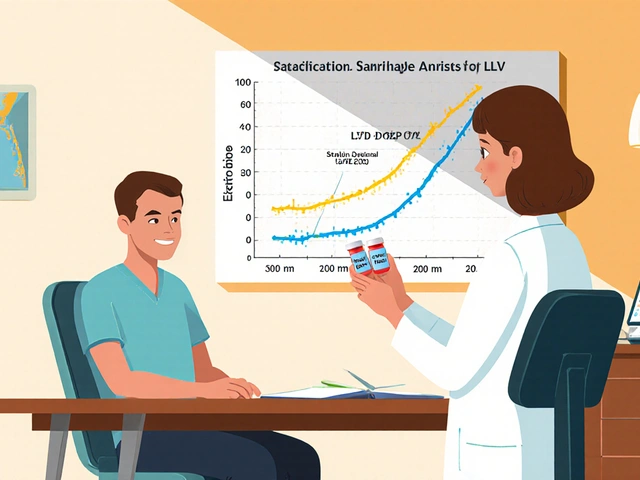
Back in 1984, the Hatch-Waxman Act is a US law that created an abbreviated approval process for generic drugs to lower healthcare costs changed the game. Before this, a generic company would have to prove safety and efficacy from scratch. Now, they only need to show that their product is pharmaceutically equivalent-meaning it has the same active ingredient, strength, and dosage form-and then prove bioequivalence is the property of two drugs to show the same rate and extent of absorption in the body. To do this, manufacturers run a study with about 24 to 36 healthy volunteers. They use a randomized crossover design: some people get the brand name first, others get the generic, and then they swap. By measuring the drug levels in the blood, researchers look at two main numbers: Cmax is the maximum concentration of a drug in the plasma and AUC is the area under the curve, representing the total drug exposure over time. If the ratio between the generic and the brand stays between 80% and 125%, the FDA generally considers them equivalent.When the standard isn't enough
Is a 25% difference really acceptable? For most drugs, yes. Your body handles small fluctuations in drug levels without a problem. But for Narrow Therapeutic Index (NTI) is drugs where small differences in dose or blood concentration may lead to serious therapeutic failures or adverse reactions drugs, that window is dangerously wide. For medications like warfarin or digoxin, a tiny shift could mean the difference between a stable patient and a medical emergency. In these cases, regulators tighten the leash, sometimes requiring the equivalence to be within 90% to 111%. There's also the issue of "complex generics." Think about a topical cream or an inhaled powder. Measuring how much of a cream absorbed into the skin by drawing blood (pharmacokinetics) is incredibly difficult and often inaccurate. For these, the industry is moving toward In Vitro Permeation Testing (IVPT) is a lab test using synthetic membranes or human skin to measure how a drug penetrates. In some cases, these lab tests are actually more reliable than human blood tests because they remove the massive variability of human biology.
The cost of proving equivalence
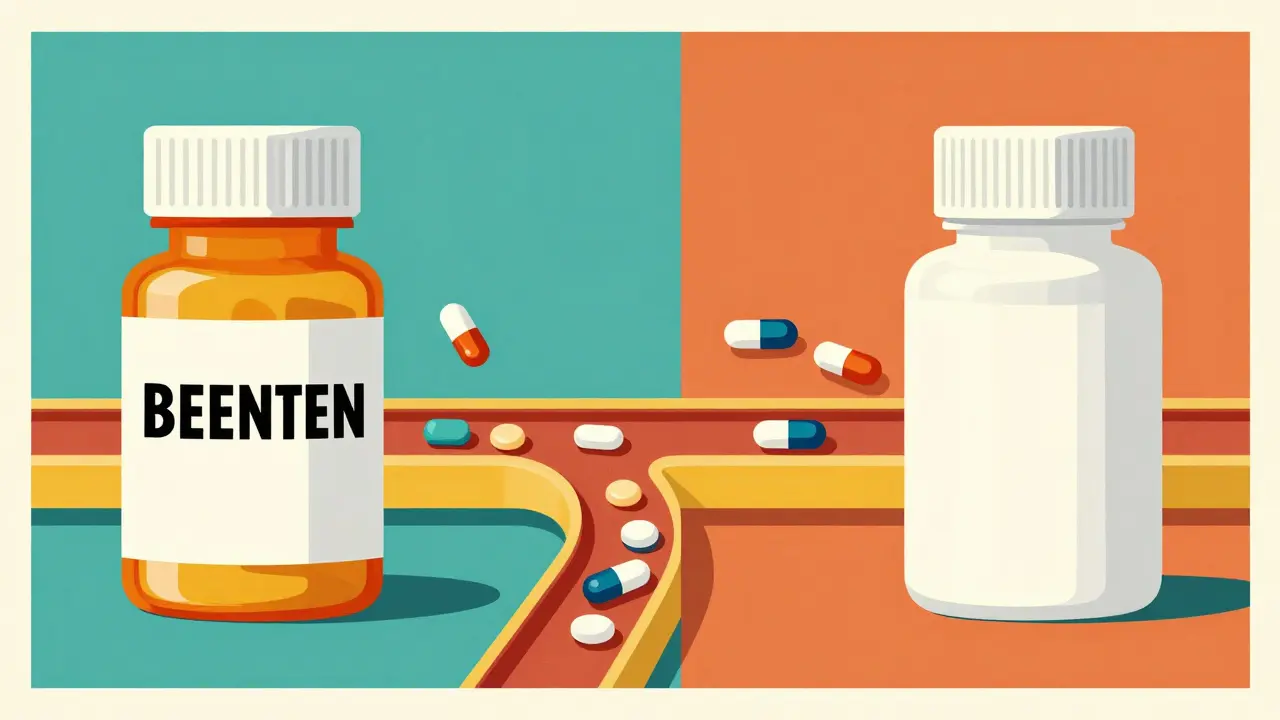
Developing a generic isn't just about copying a formula; it's a high-stakes financial gamble. A single bioequivalence study can cost anywhere from $300,000 to $1 million. The timeline is just as grueling, often taking 12 to 18 months from the first batch of the drug to the final study report. One of the biggest headaches for manufacturers is the use of excipients. These are the "inactive" ingredients-fillers, binders, and coatings. Even if the active drug is identical, a different binder can change how fast a pill dissolves in the stomach. This is why Dissolution Testing is a test that measures the rate at which the active ingredient is released from the drug product is used as a first-line check. If the dissolution profiles differ by more than 10%, the drug likely won't pass the human pharmacokinetic study.Modern shifts and PBPK modeling
We are seeing a shift toward "smarter" science. Instead of just dosing humans and hoping for the best, the FDA has begun accepting Physiologically-Based Pharmacokinetic (PBPK) modeling is a mathematical approach that simulates the drug's movement through the body based on physiological data. These computer models can predict how a drug will behave in different populations-like the elderly or people with kidney disease-without needing a new clinical trial for every single group. This is part of a larger move toward product-specific guidelines. Rather than a one-size-fits-all rule, the FDA is the U.S. Food and Drug Administration, the federal agency responsible for protecting public health by ensuring safe and effective drugs now provides nearly 2,000 specific guidances. This acknowledges that a modified-release tablet requires a totally different validation strategy than a fast-acting liquid.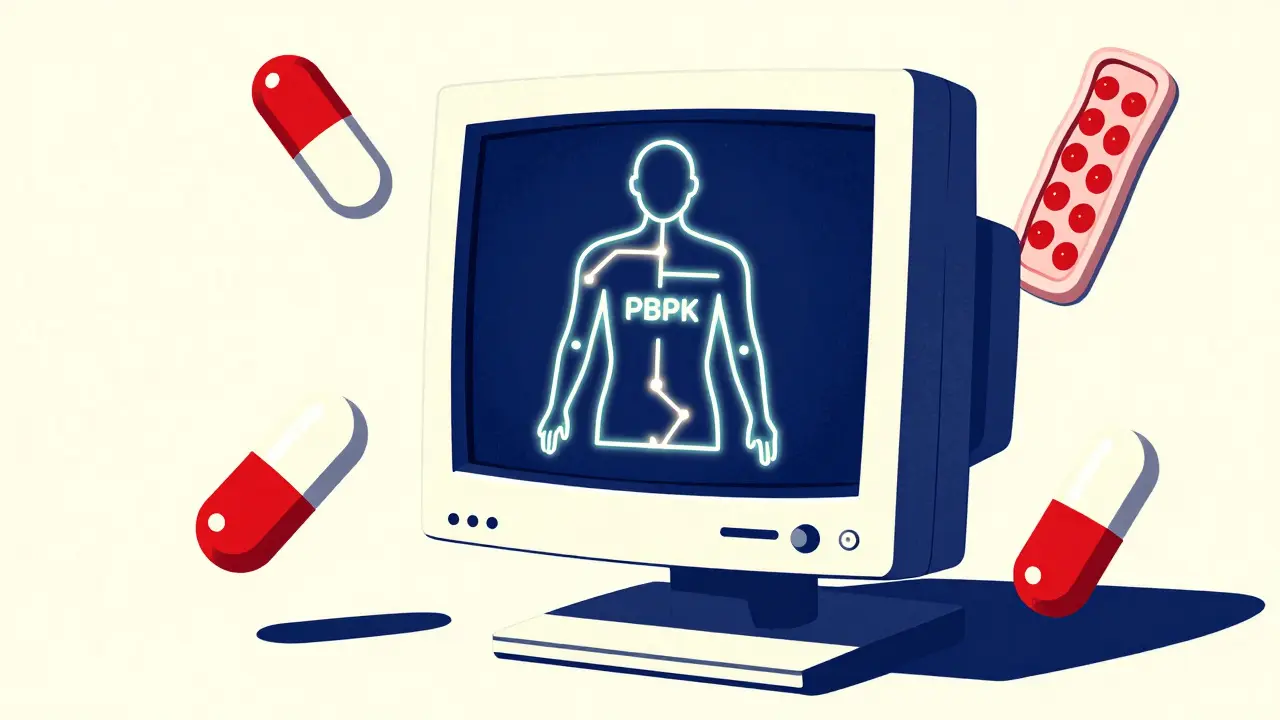
Can we trust the generic?
If you're wondering if your generic is "as good" as the brand, the data is generally on your side. For systemic immediate-release oral drugs, failure rates are typically below 2%. However, the gentamicin case is a famous cautionary tale. Research showed that some generics failed in real-world clinical settings even though they passed the standard pharmaceutical and in vitro tests. This proves that while pharmacokinetic studies are a powerful tool, they are a surrogate for clinical outcomes, not a perfect mirror. For the average person, the system works. By using a combination of chemical analysis, human blood monitoring, and mathematical modeling, regulators ensure that the generic drug provides the same therapeutic effect as the innovator. The focus has shifted from asking "Is it identical?" to "Is it clinically equivalent?"What does "80-125%" actually mean in a bioequivalence study?
It means that the 90% confidence interval for the ratio of the generic drug's absorption (Cmax or AUC) compared to the brand-name drug must fall between 80% and 125%. It's not saying the drug is 20% weaker or stronger; it's a statistical range that ensures the difference is not clinically significant for most patients.
Why are some generics more strictly tested than others?
This usually applies to Narrow Therapeutic Index (NTI) drugs. These are medicines where a very small change in the blood concentration can lead to toxicity or a total loss of efficacy. For these, the FDA often requires a much tighter range (like 90-111%) to ensure safety.
Do generics have to undergo the same clinical trials as the original drug?
No. Thanks to the Hatch-Waxman Act, generics use an abbreviated pathway. They don't need to repeat the massive safety and efficacy trials because they only need to prove they are bioequivalent to a drug that has already been proven safe and effective.
Can a generic pass a blood test but still not work?
In very rare cases, yes. This is why researchers argue that pharmacokinetic studies are a surrogate. While they show the drug is in the blood, they don't always prove the drug is working at the target site (like in the lungs or skin), which is why complex generics often require additional clinical endpoint studies.
How does food affect these studies?
Food can significantly change how a drug is absorbed. Because of this, bioequivalence studies are typically performed under both fasting and fed conditions to ensure the generic behaves like the brand regardless of when the patient eats.
Next steps for patients and providers
If you are a healthcare provider or a patient concerned about a specific switch, consider these scenarios:- For NTI Drugs: If you're switching a patient on a narrow therapeutic index drug (like phenytoin), monitor plasma levels more closely during the transition period.
- For Complex Generics: For topicals or inhalers, pay closer attention to the patient's subjective response, as blood levels might not tell the whole story.
- Checking Equivalence: You can search the FDA's "Orange Book" to see if a generic is officially rated as therapeutically equivalent (TC rating).