CDL Medication Compliance Checker
Disclaimer: This tool is for educational purposes based on general FMCSA guidelines. It does not replace a professional medical evaluation by a Certified Medical Examiner (NRCME).
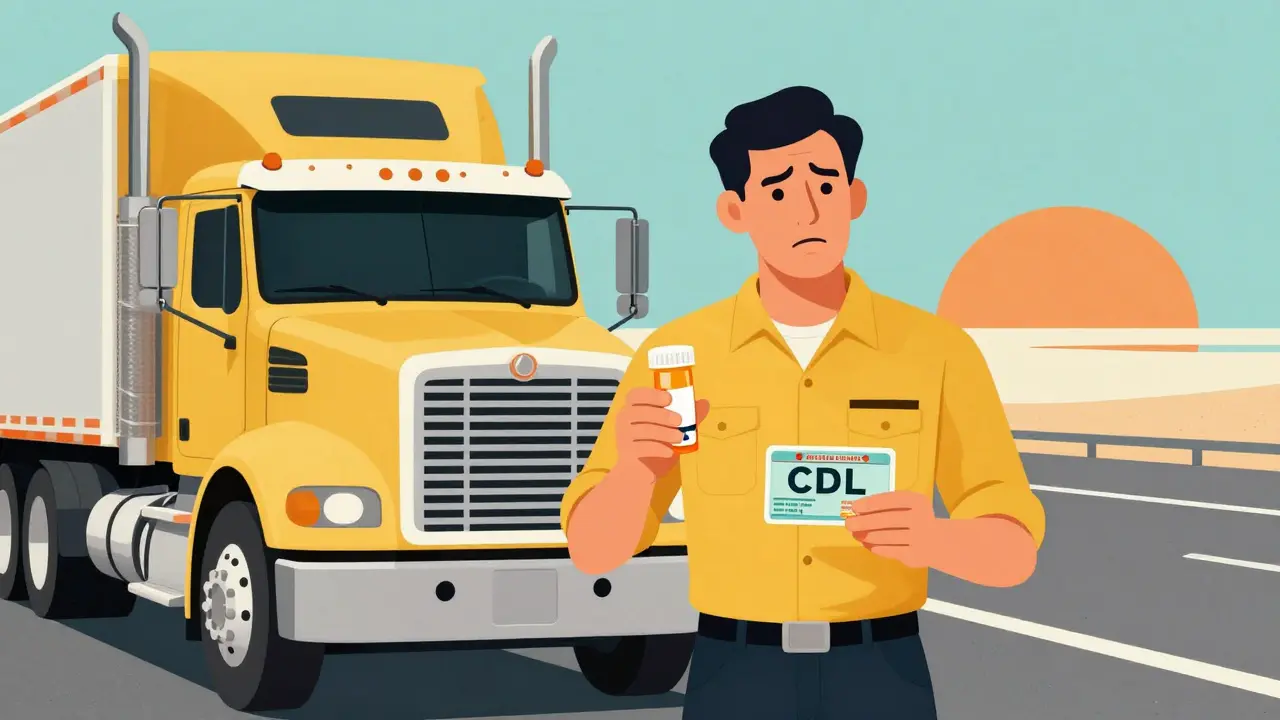
Imagine spending years earning your CDL, building a career on the open road, only to have your livelihood threatened by a prescription your doctor wrote for a common condition. It happens more often than you'd think. In the world of commercial trucking, a pill that helps you manage your health might be the same one that gets your medical certificate revoked. The stakes are incredibly high: the Federal Motor Carrier Safety Administration is the agency that regulates the safety of commercial motor vehicle (CMV) operations in the United States (FMCSA) doesn't see things in shades of gray. Either a medication is compatible with safe driving, or it is a disqualifying substance.
Quick Summary: Medication Safety for CMV Drivers
- Absolute Prohibitions: Schedule I drugs (including marijuana) and most Schedule II narcotics are strictly banned regardless of a prescription.
- The Three Rules: Prescriptions are generally allowed if they are from a licensed doctor, the doctor confirms they are safe for driving, and you follow the dosage exactly.
- Disclosure is Mandatory: You must report all medications during your DOT physical to avoid fraud or safety violations.
- ADHD Alert: Common stimulants like Adderall and Vyvanse are typically disqualifying for CDL holders.
- Reporting Window: Medication-related restrictions must be reported to the Clearinghouse within 24 hours to avoid steep fines.
Understanding the DOT Medication Framework
To keep the roads safe, the Department of Transportation the federal cabinet department responsible for the US transportation network (DOT) uses a strict set of rules called 49 CFR Parts 382 and 391. Essentially, these laws require you to be free from any physical or mental condition-including those caused by drugs-that could mess with your ability to control a heavy vehicle. If a substance is deemed "incompatible" with safe operation, it's banned. Period.
This isn't just red tape. The numbers are sobering. In 2020, about 4.2% of large truck crashes involved drivers who tested positive for disqualifying substances, leading to over 1,200 deaths. Because of this, the FMCSA maintains a very tight grip on what goes into a driver's system, using tools like the Drug and Alcohol Clearinghouse a secure online database that tracks commercial driver drug and alcohol violations to keep a real-time record of non-compliance.
Which Medications Are Strictly Banned?
The biggest trap for many drivers is assuming that a legal prescription makes a drug "safe" in the eyes of the DOT. That is simply not true. Some medications are absolute deal-breakers regardless of why you're taking them.
First, there's Marijuana a psychoactive drug from the Cannabis plant. Even if you live in a state where it's legal for medical or recreational use, the FMCSA prohibits it. If it shows up in your test, you're out. Similarly, PCP and other Schedule I controlled substances are strictly forbidden.
Then there are the stimulants. If you have ADHD, you've probably heard of Adderall a combination of amphetamine and dextroamphetamine used to treat ADHD or Vyvanse a prodrug of dextroamphetamine used for ADHD. While these are standard treatments in most offices, they are generally prohibited for CDL holders. The only common exception is if the medication is prescribed for narcolepsy, and even then, you need a specific, documented medical evaluation.
| Medication Type | DOT Status | Typical Requirement/Condition |
|---|---|---|
| Schedule I (Marijuana/PCP) | Prohibited | Absolute ban regardless of prescription. |
| Schedule II Narcotics | Prohibited | Generally banned regardless of medical necessity. |
| ADHD Stimulants | Prohibited | Allowed only for narcolepsy with strict documentation. |
| Antidepressants | Conditional | Requires Medical Examiner's review of side effects. |
| CPAP (Sleep Apnea) | Permitted | Requires proof of compliance/usage. |
Navigating the DOT Physical and Disclosure
Your National Registry of Certified Medical Examiners the official list of providers qualified to perform DOT medical exams (NRCME) doctor is the gatekeeper of your career. During your 24-month certification exam, you'll be asked to disclose every medication you take. Don't try to hide something; if a random drug test catches a substance you didn't disclose, it can be viewed as fraud.
The tricky part is the "gray area" drugs. Over-the-counter (OTC) meds can be dangerous too. For instance, common cold medicines containing pseudoephedrine or dextromethorphan can sometimes trigger false positives on drug screens. To protect yourself, keep a detailed list of everything you take-including vitamins and supplements-and present it to your examiner.
If you are taking a prescription that isn't explicitly banned but could cause drowsiness or impairment (like certain antidepressants or blood pressure meds), the examiner looks for three things:
- Was the drug prescribed by a licensed physician?
- Did the doctor make a "good faith judgment" that the dose is safe for driving?
- Are you taking the exact dose prescribed?
Dealing with Chronic Pain and the "Driver's Dilemma"
One of the hardest parts of this job is managing chronic pain. Many drivers feel trapped between a rock and a hard place: they can't use effective narcotics for pain because of DOT rules, but they can't drive if the pain is unbearable. Data from the Owner-Operator Independent Drivers Association (OOIDA) shows that over 60% of drivers have had to stop using effective pain medications just to keep their licenses.
If you're in this position, don't just quit your meds cold turkey-that can be dangerous. Instead, work with your doctor to find non-stimulant or non-narcotic alternatives. For example, some drivers have successfully switched to medications like Strattera for ADHD or other non-opioid pain management strategies and successfully petitioned for medical exemptions.
If your medical condition is severe, you might be eligible for a Skill Performance Evaluation a program that allows drivers with certain medical conditions to be certified via a practical driving test (SPE) certificate. This allows you to prove that you can safely operate the vehicle despite your condition, even if you don't meet the standard physical requirements.
The Cost of Non-Compliance
Ignoring medication rules isn't just a safety risk; it's a financial disaster. For carriers, failing to manage medication protocols during a safety audit can result in average fines of over $14,000 per violation. For individual drivers, the penalties are just as sharp. As of April 2024, failing to report medication-related restrictions to the Clearinghouse within 24 hours can trigger automatic fines of $1,250 per incident.
We're also seeing a shift toward more aggressive monitoring. The FMCSA is currently testing real-time impairment detection using biometric wearables. While this might sound like "Big Brother," the goal is to catch impairment before a crash happens. With the driver population aging, more people are requiring medications that conflict with DOT standards, making these rules even more critical to follow.
Can I take ADHD medication if I have a prescription?
Generally, no. Stimulants like Adderall and Vyvanse are considered disqualifying for CDL holders because they can affect judgment and heart rate. The primary exception is for drivers with diagnosed narcolepsy, but this requires extensive documentation and approval from a certified medical examiner.
Will over-the-counter cold medicine fail my drug test?
It's possible. Medications containing pseudoephedrine or dextromethorphan can occasionally cause false positives. The best way to handle this is to keep a log of all OTC medications you use and disclose them during your DOT physical or immediately after a test if you're concerned.
What happens if I'm taking an antidepressant?
Antidepressants are not automatically banned, but they are "conditional." Your Medical Examiner will evaluate if the specific drug and dosage cause side effects like drowsiness or delayed reaction time. If the doctor determines you can operate safely, you'll be certified.
Is medical marijuana allowed if I have a state permit?
No. The FMCSA is a federal agency, and marijuana remains a Schedule I substance under federal law. Regardless of state laws or medical permits, testing positive for THC will lead to disqualification from operating a commercial motor vehicle.
How often do I need to update my medication list?
You must provide a full list during your DOT physical every 24 months. However, if you start a new medication that could impair your driving, you should consult your doctor and potentially notify your employer or medical examiner immediately to ensure you remain in compliance.
Next Steps for Drivers
If you're currently taking a medication and aren't sure where you stand, don't guess. Start by creating a Medication Action Plan with your doctor. This document should include the generic name of the drug, the dosage, and a specific statement from your physician confirming that the medication does not impair your ability to drive safely.
For those struggling with chronic pain or ADHD, look into non-stimulant or non-narcotic alternatives. If those fail, research the Skill Performance Evaluation (SPE) process to see if you qualify for a restricted certificate. Remember, the goal is to stay healthy without compromising the safety of everyone on the road.